
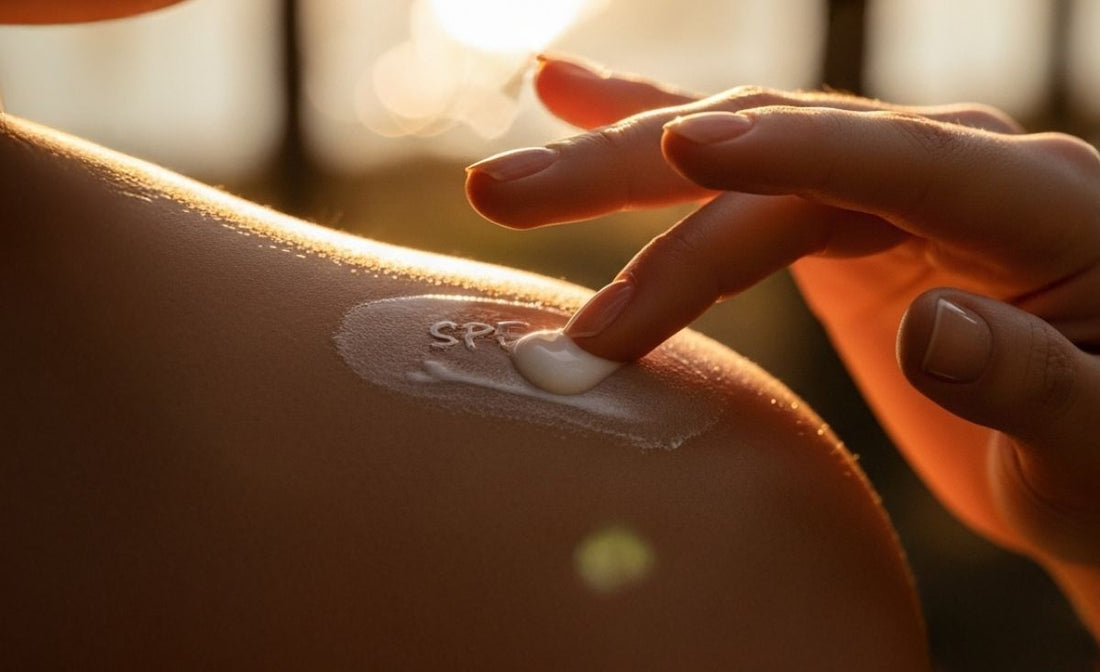
The Interaction Between Skin and the Sun: A Guide to Conscious Exposure
Exposure to sunlight is an experience that involves the complex biological mechanisms of our skin. If properly managed, it brings benefits such as the synthesis of vitamin D and a tanned complexion; if neglected, it can accelerate skin aging and cause cellular damage. Achieving a healthy, even, and long-lasting tan isn't a matter of luck, but the result of a precise protocol based on an understanding of skin physiology.
In this guide, we will analyze the three fundamental phases of proper sun exposure—preparation, protection, and regeneration—providing a technical approach for interacting with the sun safely and effectively.
PHASE 1: Preparing the Skin for UV Radiation
 Even before sun exposure, it's possible to optimize the skin's response to ultraviolet radiation. The goal is twofold: to stimulate endogenous melanin production and ensure optimal hydration.
Melanin is the natural pigment that, in addition to giving skin its color, acts as a photoprotector, dissipating part of the energy of UV rays. The production process, known as melanogenesis , can be supported through the use of cosmetic formulations containing precursors or stimulators. Substances such as tyrosine derivatives or specific plant extracts act as biological activators, predisposing the skin to faster and more even pigmentation. At the same time, deep hydration, for example through molecules like hyaluronic acid , is crucial for maintaining the integrity of the skin barrier and the skin's elasticity, making it more resilient to sun-induced oxidative stress.
PHASE 2: Intelligent Protection During Exposure
 Sun protection is the cornerstone of safe sun exposure. The choice of sun protection factor (SPF) should not be random, but based on a scientific classification of individual sensitivity.
Fitzpatrick's Phototype Classification
In 1975, Harvard dermatologist Thomas B. Fitzpatrick developed a scale that classifies skin types based on their reaction to sun exposure. This scale is now the global reference standard.
- Phototype I-II: These correspond to very fair and sensitive skin, with very low melanin production. The typical reaction is almost immediate erythema (sunburn). For these individuals, the use of an SPF 50+ is mandatory.
- Phototype III: Medium-pigmented skin, capable of tanning gradually but still prone to sunburn if exposed to intense, unprotected sun. It is recommended to start with an SPF 50 or 30 .
- Phototype IV-VI: Olive to dark skin, with high basal melanin production. The risk of sunburn is low, but protection remains essential to prevent photoaging (the degradation of collagen and elastin caused by UVA rays) and cellular damage. An SPF of 30 to 15 is recommended to protect against long-term effects.
It is important to protect not only the skin of the body, but also the more delicate skin of the face, which is constantly exposed, and the hair, whose keratin structure can be damaged by the sun, chlorine and salt water.
PHASE 3: Post-Exposure Regeneration and Repair
 After exposure to UV rays, the skin enters a stressful phase that requires targeted intervention to restore its balance. The processes to be counteracted are dehydration, inflammation, and the action of free radicals.
The post-sun ritual begins with a delicate cleansing , preferably with oily formulations or those based on non-aggressive surfactants, to remove residues of sun filters, salt and chlorine without depleting the hydrolipidic film and compromising the tan.
Subsequently, the choice of after-sun treatment depends on the condition of the skin:
- For redness and a feeling of heat: Light formulations, such as sprays or gels, containing soothing and anti-reddening active ingredients such as bisabolol (a chamomile derivative) or aloe extracts are recommended. These products offer immediate relief and lower skin temperature.
- For dehydrated skin in need of nourishment: A cream or fluid emulsion rich in hydrating, emollient, and repairing agents is preferable. Ingredients such as panthenol, vitamin E, and plant oils help rebuild the skin barrier, combat oxidative stress, and secure the tan, preventing flaking and prolonging its duration.
Application Protocols: 4 Common Mistakes to Avoid
- Insufficient Product Dose: The claimed SPF efficacy is laboratory tested using a dose of 2 mg of product per cm² of skin. Anything less will drastically reduce the level of protection.
- Failure to Reapply: Sunscreens degrade with exposure to UV rays and are washed out by sweat and water. Reapply every 2 hours and always after swimming.
- Omission of Critical Areas: Areas such as the ears, nape of the neck, neck, backs of the hands, and feet have thinner skin and are prone to premature aging. They require meticulous application.
- Neglecting Your Hair: UV rays oxidize the melanin in your hair and damage the cuticle, making it dry and brittle. Using specific protective oils is essential to maintain hair health.
Your skin is a complex and vital organ. Understanding how it interacts with the sun is the first step to protecting its health and beauty, today and in the future.
To translate these scientific principles into a complete beauty ritual, our Solehado line offers targeted solutions for each phase:
- For Preparation (Phase 1): The Bronze Tanning Activating Gel Cream , with melanin stimulators and Hyaluronic Acid, prepares the skin for an intense and even tan.
- For Protection (Phase 2):
- Sensitive Skin and Children (Phototypes I-II): The Face & Body Spray Sunscreen SPF 50+ , fragrance-free and dermatologically tested.
- Face (All Skin Types): Anti-Age Face Sunscreen SPF 50 , a treatment that prevents wrinkles and sunspots.
- Body and Sport (Phototypes III-IV): Waterproof Sunscreen with Pomegranate SPF 30 , resistant to water and sweat.
- Hair and Body: The Protective Body and Hair Oil creates a defensive film against dryness, chlorine and salt water.
- For Repair (Phase 3):
- Cleansing: The Fixing Shower Oil gently cleanses so as not to "wash away" the tan.
- Immediate Relief: After Sun After Sun Spray with bisabolol for a refreshing and soothing action.
- Deep Repair: The After Sun Fluid Cream in Airless format to nourish, hydrate and prolong the complexion.
[Discover the Solehado line and create your own personalized sunscreen protocol]