
Sunscreen: The Complete Guide to Safe Sun Exposure
Heat and sunlight are essential for life. The sun's energy helps produce vitamin D and fix calcium in the bones. Finally, it helps increase levels of serotonin, the so-called "happiness hormone."
However, ultraviolet (UV) rays can cause damage to our skin: UVB rays are responsible for sunburn, while UVA rays cause premature skin aging; in more severe cases, both can contribute to the development of skin cancer.
It is therefore essential to take special precautions when exposing yourself to the sun and use a good sunscreen.
Let's also remember that the sun's rays also affect us indirectly, not only when we expose ourselves directly to radiation, so it's important to use sunscreen daily to combat skin aging and the formation of unsightly spots.
Good habits for proper sun exposure:
Avoid sun exposure during the hottest hours of the day, from 11 am to 3 pm.
Protect your skin by wearing UV-filtering clothing, hats, and sunglasses.
Carefully choose the UVA and UVB sunscreen that best suits your skin type.
Protect children from sun exposure by using high protection sunscreens.
UV RAYS AND SUN FILTERS
There are so many sunscreen products with different ingredients, SPFs, and formulas, making it difficult to choose.
When it comes to sunscreens, there are two types: chemical filters that absorb UV rays and physical filters that act as a physical barrier to block and deflect the sun's rays. Many broad-spectrum sunscreens contain both ingredients, specifically to increase the protection against UVA and UVB rays.
UVB rays are responsible for tanning and sunburn, while UVA rays don't cause immediate visible damage, but can cause skin aging and other problems in the long term. Both UVA and UVB rays are among the primary causes of skin cancer. This is why there's so much talk about prevention through the use of effective, broad-spectrum sunscreens.
WHEN UV RAYS BECOME MORE DANGEROUS
As we said, it is necessary to avoid the hottest hours, precisely because ultraviolet radiation is more intense.
Furthermore, radiation comes not only directly from the sun but also from reflected rays, which further enhance their effect (for example, water reflects sunlight, as do sand, asphalt, and any light or shiny surface). Snow also has a high reflectivity, almost doubling UV exposure. Furthermore, UV levels increase at high altitudes, such as in the mountains or near the equator, and you can be exposed to excessive UV radiation even in the shade and at high altitudes, even on winter or cloudy days.
WHAT IS SPF?
The sun protection factor (SPF) provides an indication of a sunscreen's effectiveness in shielding it from UVB rays. For optimal protection, experts recommend using sunscreen rated "high" (SPF 30+) or "very high" (SPF 50+), at least for fair skin and for the first few days of exposure.
According to European Commission recommendations, broad-spectrum sunscreens must also provide protection from UVA rays, as indicated on the product packaging.
HOW AND WHEN TO APPLY SUNSCREEN
Many people simply apply too little sunscreen. Apply generously to your entire body about 20-30 minutes before going outside. Don't forget to apply it to your ears, neck, feet, ankles, and the backs of your hands (often overlooked areas that can easily become red if not adequately protected). It's also essential to reapply several times a day, especially after swimming or heavy sweating (even with waterproof formulas).
It is advisable to choose different sunscreen formulas that can meet the needs and desires of the whole family (protections with different SPFs depending on the skin type and the area of application, e.g. face or body).
DON'T FORGET THE EXPIRY DATE OF YOUR SUNSCREEN 👀
Always remember to check the PAO symbol on the packaging (it stands for Period After Opening, and is found on all cosmetic packaging. It's the image of a small jar that indicates how long the product can be used after opening). If you still have any old sunscreen residue from last summer, it's best to throw it away; it may have lost its effectiveness!
EXTRA ATTENTION FOR THE LITTLE ONES.
Children's skin is particularly vulnerable to the sun's harmful effects. This is why pediatricians and dermatologists recommend that infants and children under 3 years of age should never be exposed to direct sunlight. If sun exposure is unavoidable, make sure you always have appropriate clothing and a high-SPF sunscreen on hand to protect their skin. After bathing, dry your child with a towel and reapply sunscreen.
THE IMPORTANCE OF AFTER SUN
After sun exposure, skin can become red and dehydrated; for this reason, it's essential to use a product formulated with ingredients that hydrate and nourish the skin, as well as soothing and refreshing it, restoring its normal moisture balance.
After-sun lotion is ideal for softening skin, eliminating that tight feeling, and helping your tan last longer. It's perfect for use after a bath or shower, after a day at the beach or in the mountains, or after sunbathing. It can also be used after returning to the city because it helps keep skin hydrated and sets your tan in place.
OUR ADVICE
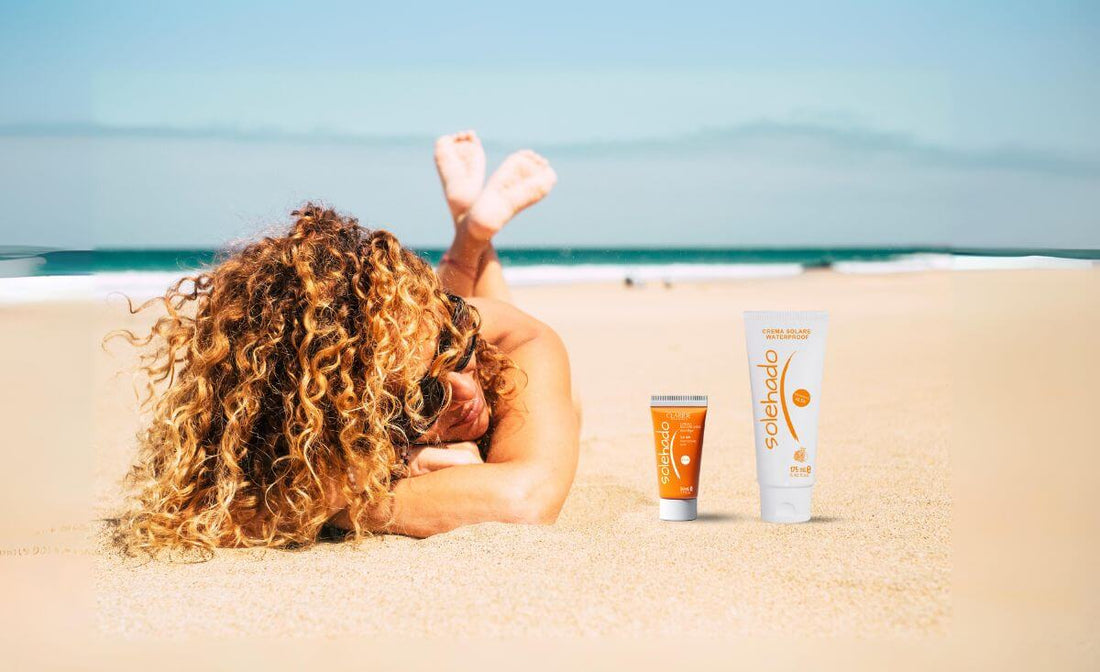
For a perfect tan we recommend our Waterproof Pomegranate Sunscreens for all skin types with low, medium, and high protection.
Our anti-aging face sunscreen (medium and high protection) is specifically designed for faces with a lighter texture.
WHAT ABOUT AFTER SUN?
We recommend our Refreshing and Hydrating After-Sun Fluid Cream with Bisabolol, ideal for restoring skin softness and counteracting any redness.
Finally, if in addition to hydrating you want to try to keep annoying summer insects away, you can try the After Sun Protection Face Cream with Citronella and the After Sun Spray for the Body with Citronella.
🌴 Happy tanning everyone! 👋